Workshop

Person-Centered Emergency Preparedness (P-CEP): Building Resilience Through Relationships, Strengths, & Community

About this session

This conversation will introduce participants to Person-Centered Emergency Preparedness (P-CEP), an evidence-informed approach developed by the University of Sydney that helps people identify their strengths, support networks, resources, and preparedness needs before emergencies happen.

As the first organization in the United States to pilot P-CEP, Upstream Access has adapted and implemented this approach with disabled people, older adults, caregivers, service providers, and community organizations across Oregon.

The presentation will provide an overview of P-CEP and explore key areas that can impact preparedness and resilience, including social connectedness, communication, health, transportation, assistive technology, and personal supports. Upstream Access will also share lessons learned from implementing P-CEP in Oregon and examples of how a person-centered approach can strengthen individual and collective resilience.

Rather than approaching preparedness as a one-size-fits-all checklist, P-CEP recognizes that people have different strengths, needs, resources, and support networks. This presentation will highlight how understanding those factors can help individuals and communities prepare in ways that are more accessible, realistic, and inclusive.

Participants will leave with an introduction to P-CEP, practical ideas they can consider in their own preparedness efforts, and resources for learning more.
Hosted by

Moderated by

Speaker
Executive Director

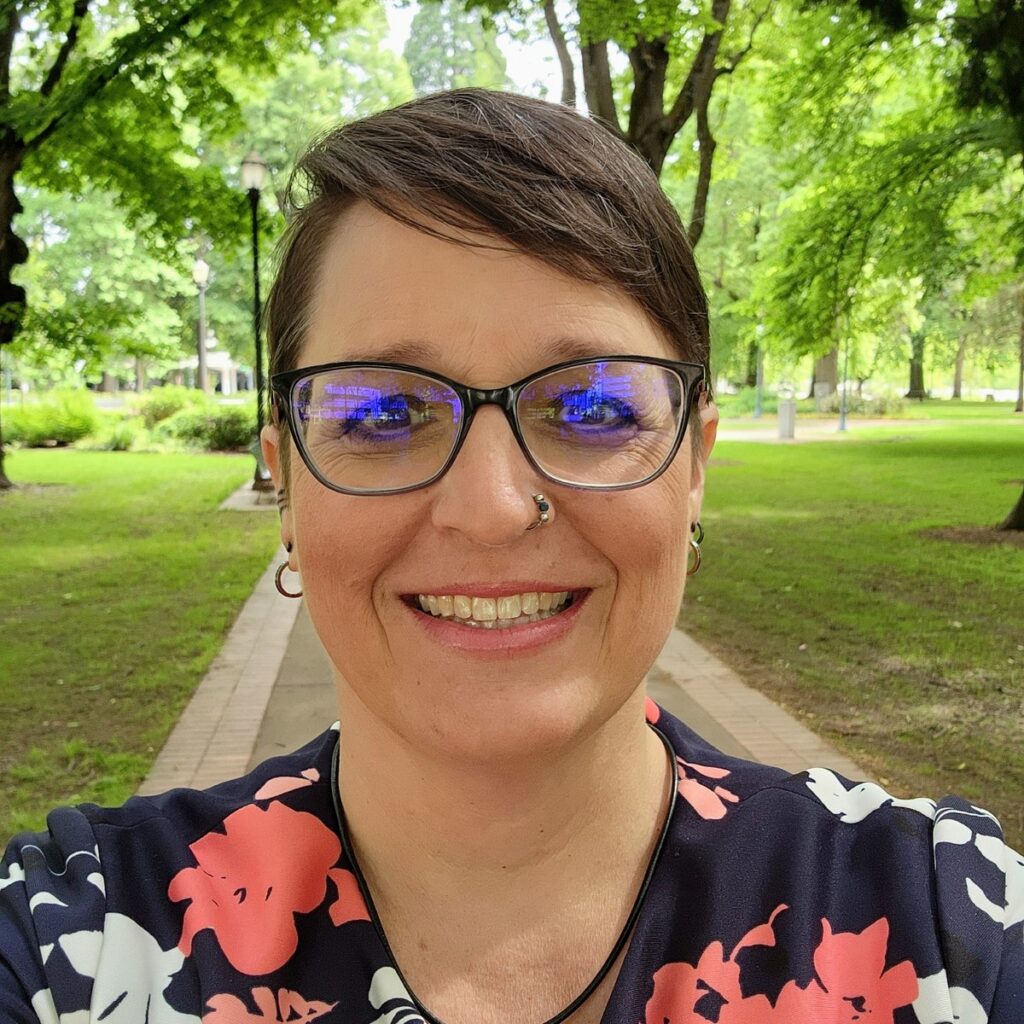
Erin Taylor (she/her) is a passionate advocate for equity and accessibility, dedicated to dismantling ableism and fostering belonging. Her work centers disabled people’s voices, honors intersectionality, and ensures access needs are recognized and met. With deep expertise in creating accessible, inclusive training materials, Erin has presented throughout Oregon, nationally, and internationally on disability justice, anti-ableism, health promotion, and disaster preparedness.

In 2022, she co-founded AIM-4-Access with her partner, and in 2023 helped launch the nonprofit Upstream Access, which creates spaces for social connection while advancing inclusive disaster preparedness and cross-disability collaboration throughout the state of Oregon. Through this work, Erin has helped position Upstream Access as the first organization in the United States to pilot Person-Centered Emergency Preparedness (P-CEP), a strengths-based curriculum developed in Australia.

A core focus of Erin’s disaster preparedness work is power resilience. Through community listening and direct engagement, she has highlighted a critical and often overlooked gap: many disabled people lack access to backup power or solar-powered devices during extreme weather events and power outages. Her work addresses this inequity by integrating disability justice, climate resilience, and practical solutions that support autonomy, safety, and interdependence. Taylor was a recipient of the Natural Hazard Workshop Disability and Disasters Award in 2026.

A proud member of the disability and LGBTQIA+ communities and with non-apparent disabilities, Erin holds an M.A. in Disability Studies from the City University of New York and a B.A. in Communication Studies from Western Oregon University. Beyond advocacy, she is a lifelong musician and enjoys hiking, kayaking, and capturing the beauty of the Pacific Northwest through photography.

en_USEN